
How to Design a Home for Families Who Love Hosting
If your family regularly invites relatives, friends, or guests over, your home needs to support more than everyday living. A good home design for hosting should make entertaining comfortable while keeping the space functional for your family.
Therefore, your layout, seating, dining area, lighting, and storage all need careful planning.
Create a Comfortable Living Area
First, focus on the living room. Instead of filling the space with large furniture, choose a layout that allows guests to sit and interact comfortably.
For example, arrange sofas and chairs so people can easily face each other. Meanwhile, keep enough space between furniture for smooth movement.
Plan Flexible Seating
Your everyday seating may not be enough when guests arrive. However, you do not necessarily need a huge sofa.
Instead, consider movable chairs, ottomans, benches, or nesting tables. As a result, you can adjust the arrangement depending on the number of guests.
Make the Dining Area Practical
Dining becomes especially important for families who love hosting.
Therefore, choose a dining table that fits your regular family size while allowing some flexibility for guests. If space allows, consider an extendable table.
In addition, keep serving areas close to the dining space so you can serve food without constantly moving between rooms.
Keep the Kitchen Connected
For many families, hosting does not happen only in the living room. Guests often gather around the kitchen while food is being prepared.
A well-planned kitchen can therefore improve the entire hosting experience. Consider a practical island, sufficient counter space, and easy access to frequently used items.
Add Smart Storage
Hosting often means keeping extra dinnerware, serving dishes, cushions, and other items at home.
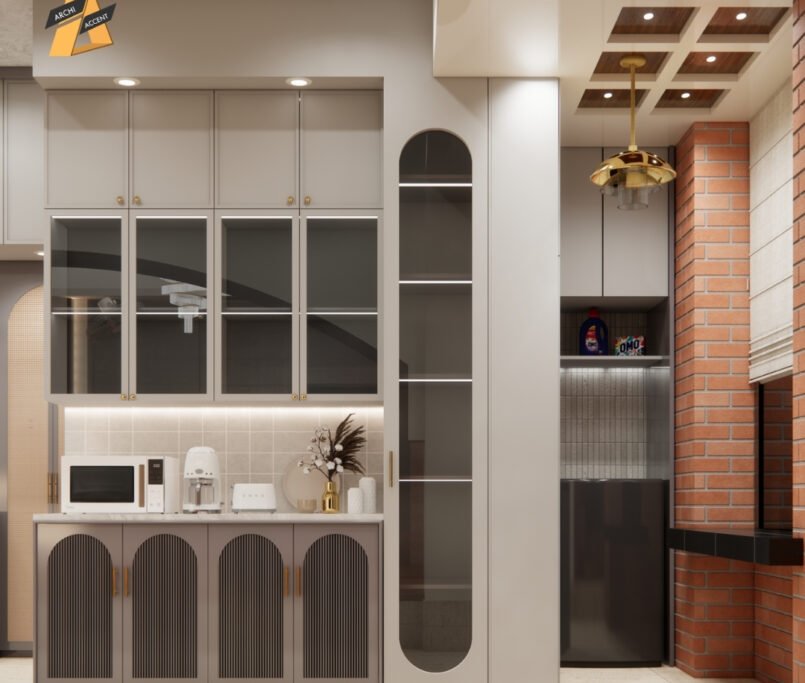
Therefore, include dedicated storage for these items. Built-in cabinets, sideboards, and concealed storage can keep everything accessible without making the home look cluttered.
Think About Lighting
Lighting can change how a space feels when you host guests.
Use layered lighting instead of relying on one central fixture. For example, combine general lighting with pendant lights, wall lights, or accent lighting.
Moreover, dimmable lighting can help you create different settings for everyday family life and evening gatherings.
Make Guest Movement Easy
A good home design for hosting should also consider movement.
Guests should be able to move from the entrance to the living and dining areas without navigating around unnecessary furniture. Therefore, keep major pathways open and avoid overcrowding.
Design Around Your Family
Most importantly, your home should work for your family even when nobody is visiting.
That is where personalized design becomes important. Your designer should understand how your family lives, how often you host, and what kind of gatherings you usually have.
At Archi Accent, we use these details to develop spaces that balance everyday family life with entertaining.
Don’t Design Only for Large Gatherings
You may love hosting, but you probably do not have guests every day.
Therefore, avoid designing your entire home around occasional gatherings. Instead, choose flexible furniture and layouts that work for both everyday use and larger groups.
As a result, your home remains comfortable whether you have two guests or twenty.
How Archi Accent Approaches Hosting-Friendly Homes
At Archi Accent, we believe there is no single formula for a hosting-friendly home.
A family that hosts formal dinners has different requirements from one that prefers casual gatherings. Through personalized design, we consider your lifestyle, space, preferences, and hosting habits before developing the interior.
Good home design for hosting is not about simply adding more seating. Instead, it involves creating a space where people can move, sit, eat, talk, and spend time comfortably.
With flexible furniture, smart storage, practical layouts, and personalized design, you can create a home that works beautifully for both your family and your guests.